JOIN THE EMAIL LIST
Want encouraging info and ways to find HOPE? Join our email list!
Broken, Not Destroyed
Somewhere along the way, a lot of us picked up a quiet equation: broken equals ruined. Once something cracks, the thinking goes, its usefulness is over. Set it aside. Replace it. Move on.
I don't believe that. Not about pottery, and not about people.
I've had seasons where I felt shattered, not bent, not stressed, but genuinely shattered, like whatever I used to be wasn't coming back in the same shape. If you've been there, you know it's a specific kind of grief. You're not just grieving a circumstance. You're grieving the version of yourself that existed before the break.
Here's what I want to offer you, gently: broken is not the same word as destroyed. They get used interchangeably, but they are not the same thing.
What breaking actually does
Destroyed means gone. Unusable. Beyond repair. But broken, actual, honest broken, just means changed. Something that was whole is now in pieces, and pieces can be put back together in a way that whole things never could be shaped in the first place.
Think about a bone that breaks and heals. Doctors will tell you the healed spot is often stronger than the surrounding bone, not because the break was good, but because the healing process laid down new material precisely where the damage was. The strength doesn't happen despite the fracture. It happens at the fracture site.
I don't say that to rush you toward some tidy silver lining. If you're in the middle of the break right now, you don't need someone cheerfully pointing at future strength. You need permission to actually be in pieces for a while without believing that means you're finished.
The art that names this
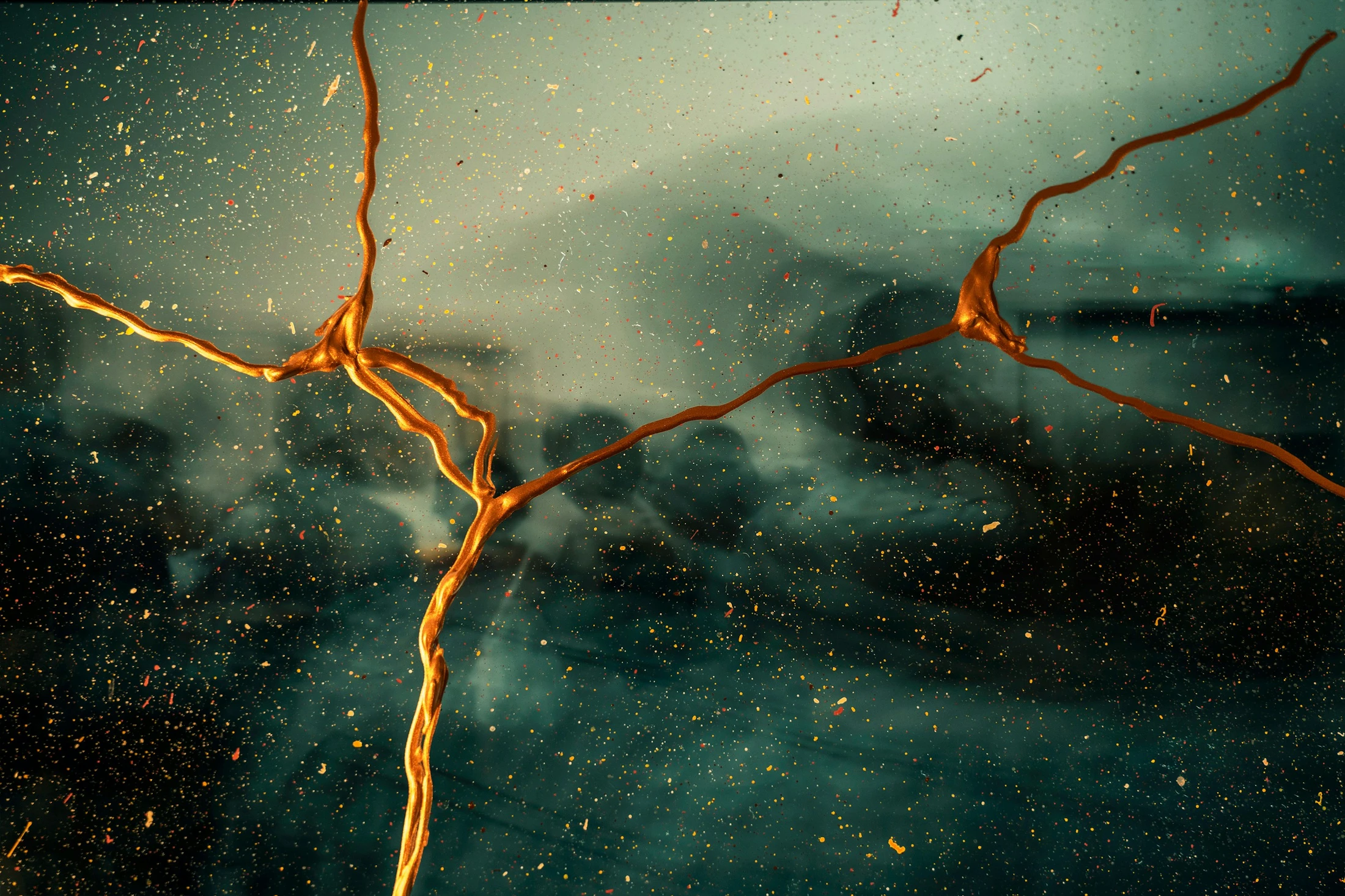
This is where the image of kintsugi keeps showing up in my own life and in this project. It's the old practice of repairing broken pottery with a lacquer dusted in gold, not to disguise where it cracked, but to trace the break in gold and let it become part of the piece's story.
No one looks at a kintsugi bowl and says, "What a shame it broke." They look at the gold seams and understand: this piece has a history, and the history is visible, and the history is beautiful.
That's not a metaphor I use to minimize pain. Breaking hurts. The moment of the crack is real and it's allowed to just be hard. But the gold doesn't erase the crack; it honors it. And I think that's closer to how healing actually works than the fantasy of going back to "like new."
Broken, and still being used
If you're in a season where you feel like the useful version of you got left behind somewhere, I want to push back on that, not with a slogan, but with an honest observation: the things that make you feel most disqualified right now might become the exact places where you're able to sit with someone else in their own break, later, and say, "I know. I've been there too."
That's not destruction. That's repair in progress.
You are broken. You are not destroyed. There's a difference, and it's worth holding onto.
This is one of the core threads running through Hope for the Broken Soul, the idea that our cracks aren't disqualifying, they're where the gold goes. If that's a message you need right now, I hope you'll walk through more of it with me.